Background
I try to work with each language I am studying every day. That doesn’t always happen. Nevertheless, I dedicate space on the site for each language to record a log of what I’ve done.
This log is dedicated to my studies of Hebrew. As a native English speaker, Hebrew is the first language I am studying that is part of the Afro-Asiatic family. It is also the first language I am studying that has a non-Latin based writing system. All of which makes it genealogically unrelated and structurally very different from the language I grew up with.
Part of what drew me to Hebrew is personal. It is a heritage language for me, and there is something meaningful about engaging seriously with the language that runs through so much of Jewish history, liturgy, and culture. Even before I began studying it, Hebrew had been present in the peripheral of my life, without me ever truly understanding it. Beginning to study it now feels like I’m finally reaching toward something that was always in the background.
Beyond the personal, Hebrew carries an extraordinary cultural and historical weight. It is one of the oldest languages with a continuous literary tradition, the language of the Tanakh (Hebrew Bible), and remarkably, a language that was revived as a living spoken tongue in the modern era after centuries in which it existed primarily in religious and scholarly contexts. That story of revival is unlike anything in the history of any other language, and it makes Modern Hebrew feel like something genuinely unique to engage with.
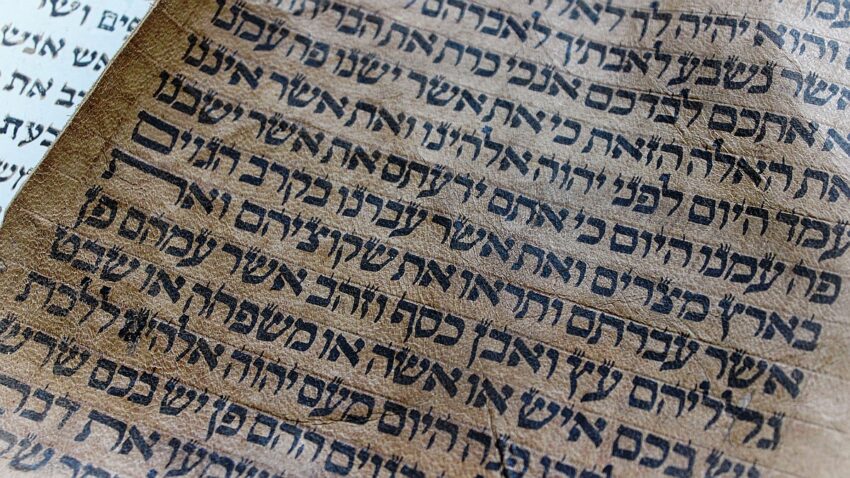
Then there is the writing system. Hebrew uses its own alphabet, the aleph-bet, written and read from right to left. Standard written Hebrew typically omits vowels entirely, leaving them to be inferred from context, a feature that is deeply unfamiliar to someone whose entire literacy has been built on a fully written-out Latin script. I won’t pretend that’s not daunting. But it is also fascinating, and learning to read it has been one of the more rewarding early challenges of this study.
My current (2026) focus is on Modern Hebrew, but I plan on exploring Biblical Hebrew at some point in the future.
Visit the Resources and Tools page for an expanded catalog of language learning resources I own.
Running log (sorted by date, in descending order)
2026-05-03 and 2026-05-04
No Hebrew practice, only Spanish.
2026-05-01 and 2026-05-02
Getting Started in Modern Hebrew: Reviewed pages 1 – 15 (repeat for consolidation).
2026-04-27 through 2026-04-30
Writing: Worked on handwriting the Alef-Bet in my notebook.
2026-04-26
Getting Started in Modern Hebrew: Began Unit 2 (Family Life). Covered material on pages 12 – 15, along with audio files 02-01 and 02-02. Some family vocabulary + possessive pronouns.
Anki: Added 22 words/phrases to the Hebrew Vocabulary deck (culled from the Getting Started coursebook: pp. 12 – 15).
2026-04-25
Anki: Completed Alef-Bet and Hebrew Vocabulary decks.
2026-04-24
Gematria: Did a word study of the word Torah/תּוֹרָה. Found that is has the same gematria value of the phrase et hahar/אֶת הָהָר (the mountain). Significant in the context of Shemot 19-24 (narrative of Mount Sinai).
2026-04-23
Pimsleur Hebrew: Level 1, Lesson 4 (repeated. Lesson 5 was a challenge the other day).
Anki: Completed Alef-Bet and Hebrew Vocabulary decks.
2026-04-20 through 2026-04-22
N/A (worked on building Language Log website)
2026-04-19
Anki: completed Alef-Bet and Hebrew Vocabulary decks.
Pimsleur Hebrew: Level 1, Lesson 5 (with exercises).
2026-04-18
Getting Started in Modern Hebrew: Covered material in pages 8-10, thereby completing Chapter 1 (1st pass). Will review in a couple of days.
Anki: Added 20 new words/phrases to Hebrew Vocabulary deck: the 12 months (Gregorian calendar), plus 8 question words/phrases. Culled from Getting Started coursebook (pp. 8-9).
2026-04-17
No formal Hebrew study, though I did a Kabbalistic analysis of Binah and “and he ate” using gematria and Tanakh.
2026-04-16
Anki: Completed learn/due for Alef-Bet and Hebrew Vocabulary decks.
2026-04-15
Anki: Completed learn/due for Alef Bet and Hebrew Vocabulary decks.
Writing: Entered three phrases into my notebook, writing in Hebrew, then transliteration and translation (chosen from Getting Started in Modern Hebrew 01.05 listening exercise (p. 7).
Getting Started in Modern Hebrew: Studied verb endings/gender/case using 5 verbs: speak, want, understand, go/travel, live/dwell (pp. 7 – 8).
Pronouns: Drilled Hebrew pronouns from my notes.
Writing: Wrote two lines each for the following characters: Alef, Bet with Dagesh), Vet, Gimel, Dalet (with Dagesh), and Dalet.
2026-04-14
Anki: Completed learn/due for Alef Bet and Hebrew Vocabulary decks.
Writing: Began Alef-Bet handwriting practice. Wrote Aleph, Bet, Gimel, and Dalet (two lines print and two lines cursive for each letter).
Pimsleur Hebrew: Level 1, Lesson 4.
Anki: Added 7 new words/phrases to the Hebrew Vocabulary deck (from the Pimsleur lesson).
2026-04-13
Anki: Completed learn/due for Alef Bet and Hebrew Vocabulary decks.
Duolingo: Started “Learn the Letters” section.
Watched video: “Learn the Hebrew Alphabet in Just 20 minutes – Alef Bet Made Simple” (https://www.youtube.com/watch?v=uiGXh2BFKUo).
Watched video: “Learn the Pronouns in Hebrew” (https://www.youtube.com/watch?v=y4nkIRVASb4). Reviewed the 10 pronoun forms from my notes.
Lingopie: “All the Torah on One Foot” S01E01 (5:33)
Pimsleur Hebrew: Level 1, Lesson 3 (repeated).
2026-04-12
Anki: Completed learn/due for Alef Bet and Hebrew Vocabulary decks. Added 7 new words to the Hebrew Vocab deck (singular/plural pronouns of both genders that weren’t already included in the deck) – Source: Getting Started in Modern Hebrew (p. 5).
Getting Started in Modern Hebrew: Reviewed audio files for sections 01.01 through 01.03.
2026-04-11
Anki: Completed learn/due for Alef Bet and Hebrew Vocabulary decks. Added 5 phrases from Getting Started in Modern Hebrew: 01.02 (p. 3).
2026-04-10
Pimsleur Hebrew: Level 1, Lesson 3 (with exercises).
Anki: Added 9 new words/phrases to the Hebrew Vocab deck. Did Hebrew Vocab and Alef Bet decks.
2026-04-09
Pimsleur Hebrew: Level 1, Lesson 2 (repeated).
Anki decks: Pimsleur Hebrew, Alef Bet. Anki: Renamed Pimsleur Hebrew deck to Hebrew Vocab. Added a list of words and phrases from Getting Started in Modern Hebrew (Teach Yourself) 01.01 listening practice (p. 3). Excluding duplicates, this added 7 new words/phrases to the deck.
2026-04-08
Pimsleur Hebrew: Level 1, Lesson 2 (including all the exercises).
2026-04-07
Created document to capture Pimsleur vocabulary (transliteration/Hebrew/translation). Reviewed vocabulary from Level 1, Lesson 1.
2026-04-06
Pimsleur Hebrew: Level 1, Lesson 1 (repeated). Plus all the practice and speaking exercises for lesson 1.
Listening practice: Vocabulary with Noni: S01E01 (Lingopie).
Installed Hebrew language pack to Windows (laptop). Saved a keyboard layout image and also generated a “cheat sheet” to use until I can memorize the key mapping.
Anki: Started a new deck – Pimsleur Hebrew – where I am capturing vocabulary from the lessons. Front side each card is in Hebrew, back side is transliteration + translation. Entered 11 words.
2026-04-05
Pimsleur Hebrew: Level 1, Lesson 1, plus the practice exercises.
Duolingo Hebrew: Section 1, started Unit 1.
Getting Started in Modern Hebrew (Teach Yourself): All of the front matter, and then through/including xviii of “The Hebrew Alphabet” section.
Hebrew notebook: Started a notebook (physical/pen and paper) for this language. Entered four terms I pulled from Lesson 1 of Pimsleur. Format using = Transliteration / Hebrew script (block) on one line followed by English translation below.
Listening practice: Piece of Hebrew (YouTube channel) – “Easy Hebrew Listening Practice for Beginners” (6:36) – https://www.youtube.com/watch?v=XKfM1PccZ3A